Category Archives: Marine Conservation

Feasting in Anilao

Manila is a mega-city with dirty streets, traffic jams and bad air.  Just 2 hours south is a coastal paradise.  The municipalities of Mabini and Tingloy are commonly, if erroneously, known as Anilao.  Anilao is the diving back yard of Manilanos who want a quick weekend diving trip.  Anilao, once a haven of dynamite and cyanide fishing has turned around to become a world class diving destination, but nestled in the hills above Cathedral dive site is the hidden gem of Bontoc in Batangas.
20131213_070604

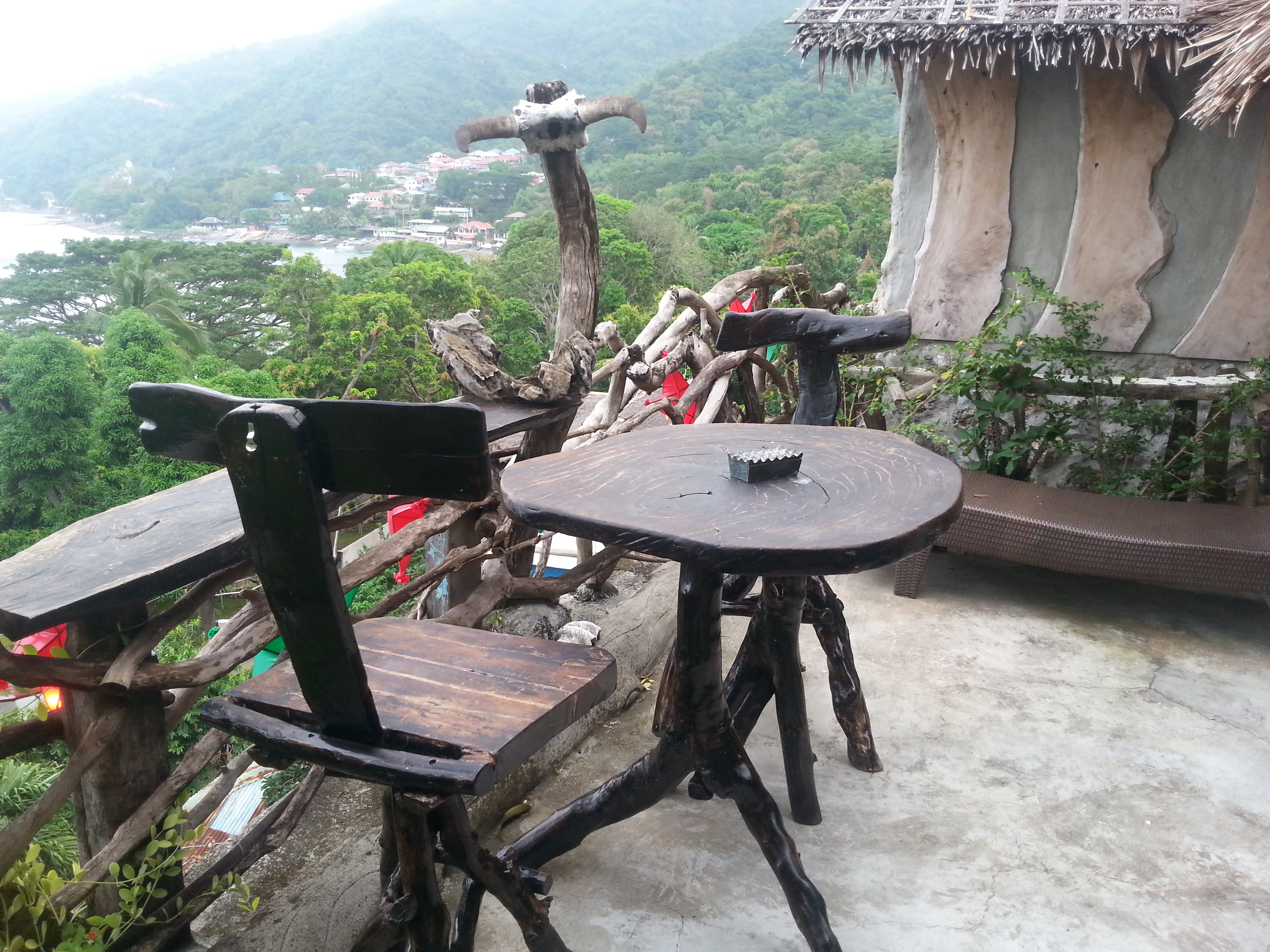
The view from the main deck.

The view from the main deck.

Guest room.  With a loft above for 4 additional beds.

Guest room. With a loft above for 4 additional beds.

Bontoc in Batangas is the home and guesthouse of Romy and Anne Trono.  They built the house as a weekend getaway for them and their three children but as the kids grew up, the place has slowly turned into a side business for them to welcome friends who come for Anne’s gourmet cooking, Romy’s bonhomie, the diving, and the general relaxed atmosphere of the place.

The music system is high tech!

The music system is high tech!

20131212_213221

Jo and Lisa always ready with a glass of water or rum!
Jo and Lisa always ready with a glass of water or rum!

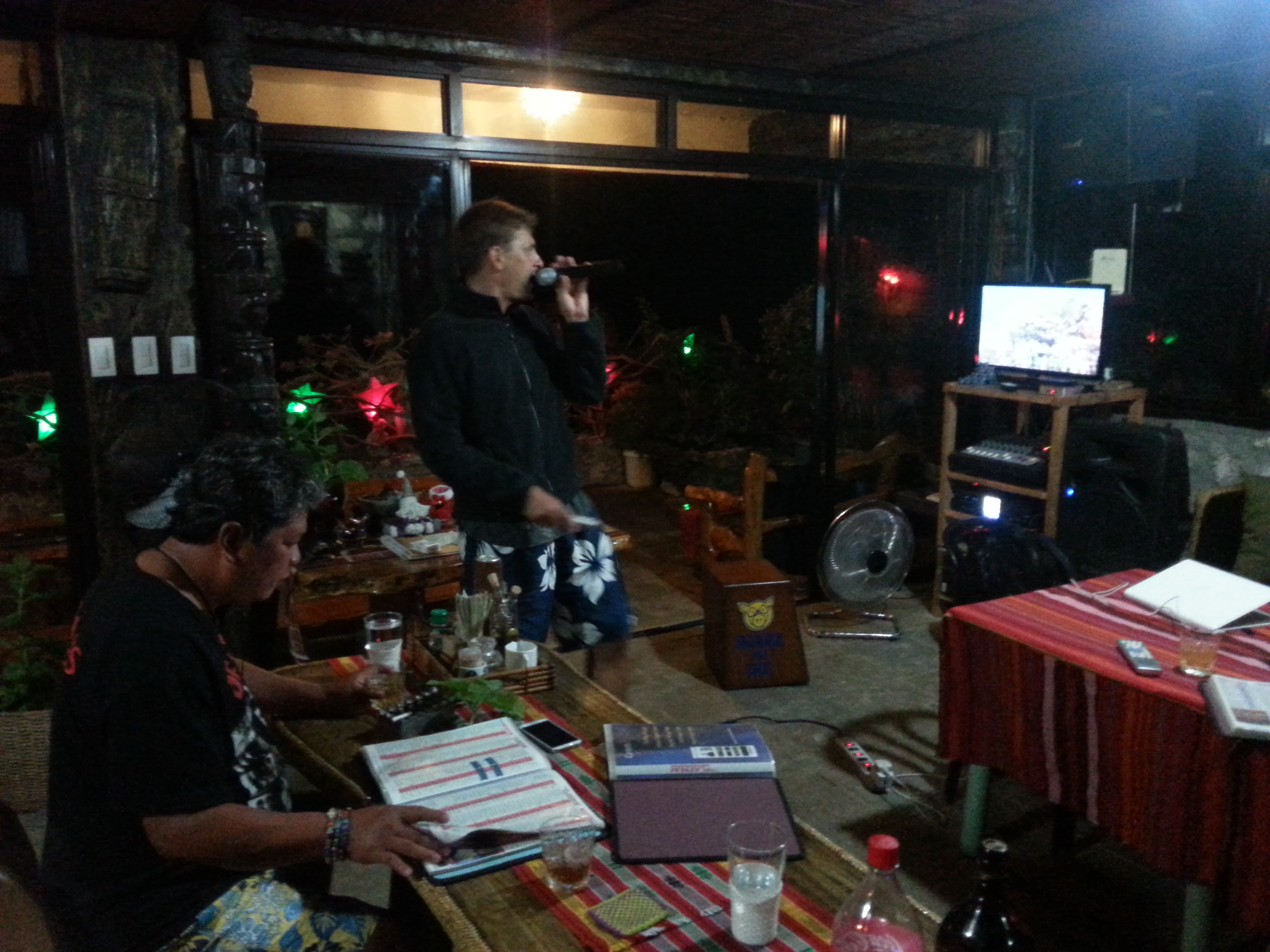
Cannot stay with Romy without singing a few songs.

Cannot stay with Romy without singing a few songs.

At Bontoc in Batangas you will never be without a drink in your hand.  The staff always have a glass of ice water, coffee, or rum and coke ready.  The rate includes all you can drink and three buffet meals a day.  The meals are presided over by Anne and their chef daughter Abby and always include several traditional Filipino dishes – fish, vegetables and pork.

When we arrived for our 4 night stay at Bontoc to collect stories for our book project, Romy told us that we were not allowed to leave unless we gained 2-4 pounds.  Fortunately, they didn’t weigh us at check in.  Eric, who is used to one maggi noodle per day, was worried about eating too much.  He had no idea what was in store…….
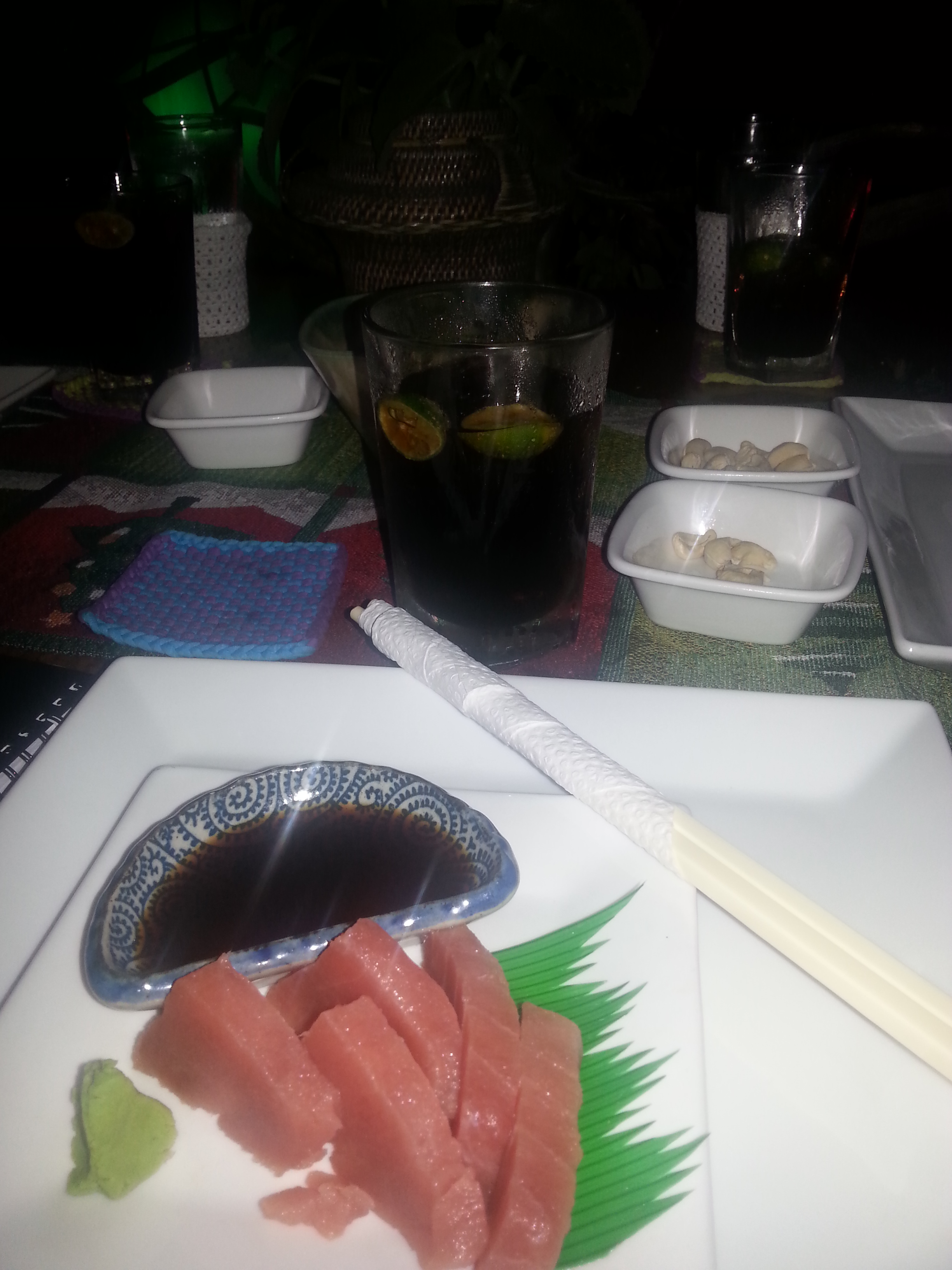
20131212_182428

Fresh yellowfin tuna sashimi. Wow!

20131213_195128

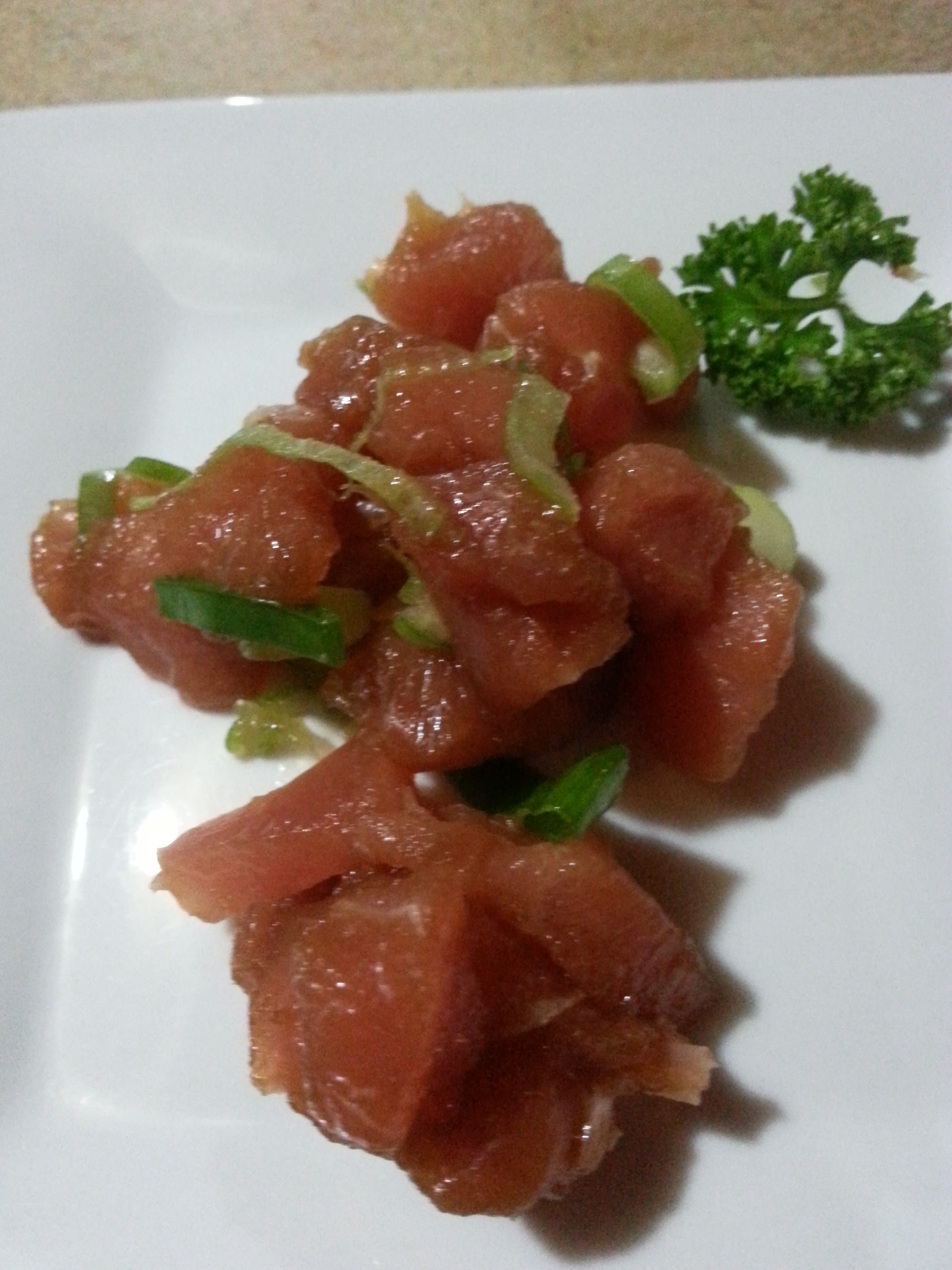
Raw tuna salad with sesame oil. Like eating raw butter but better!

Fried chicken with kaffir (I hate that name but can't find an alternative) lime.  Masarap! Sedap! Delicious!

Fried chicken with lime leaves. Masarap! Sedap! Delicious!

Raw tuna marinated in sesame oil, onions and chili.
Raw tuna marinated in sesame oil, onions and chili.

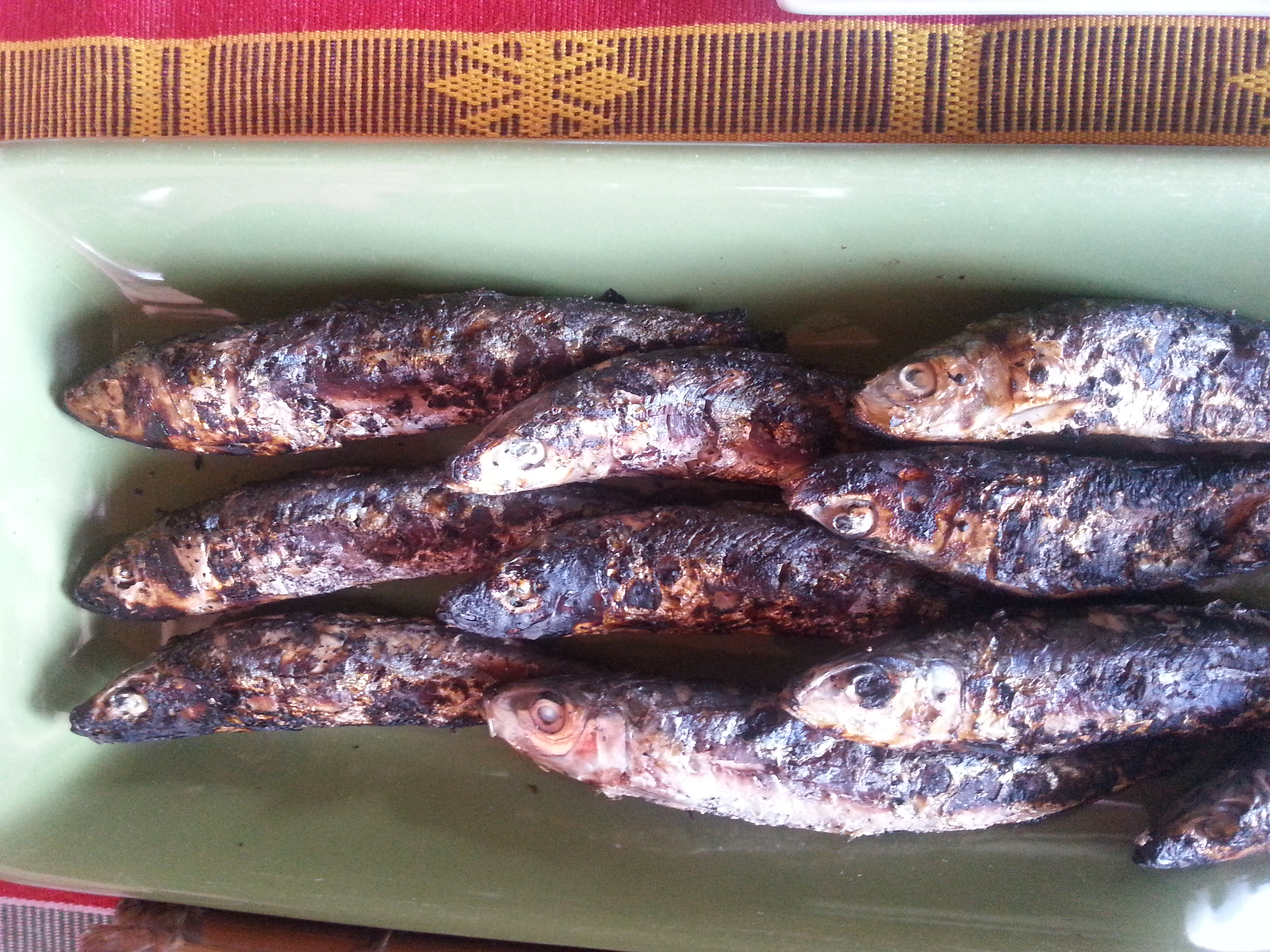
Grilled fish.

Grilled fish.

Grilled squids. Yummmmm.

Grilled squids. Yummmmm.

Mixing raw tuna for kinilaw on a beach in Anilao.

Mixing raw tuna for kinilaw on a beach in Anilao.

Anne is a gourmet cook. Her meals use simple local ingredients and recipes but she makes them with care and love that shines through in the simplest of dishes.  Every meal is a journey through the Philippines archipelago and usually features a gorgeous fish, some pork and some vegetables.

Anne Trono with one of her signature meals

Anne Trono with one of her signature meals

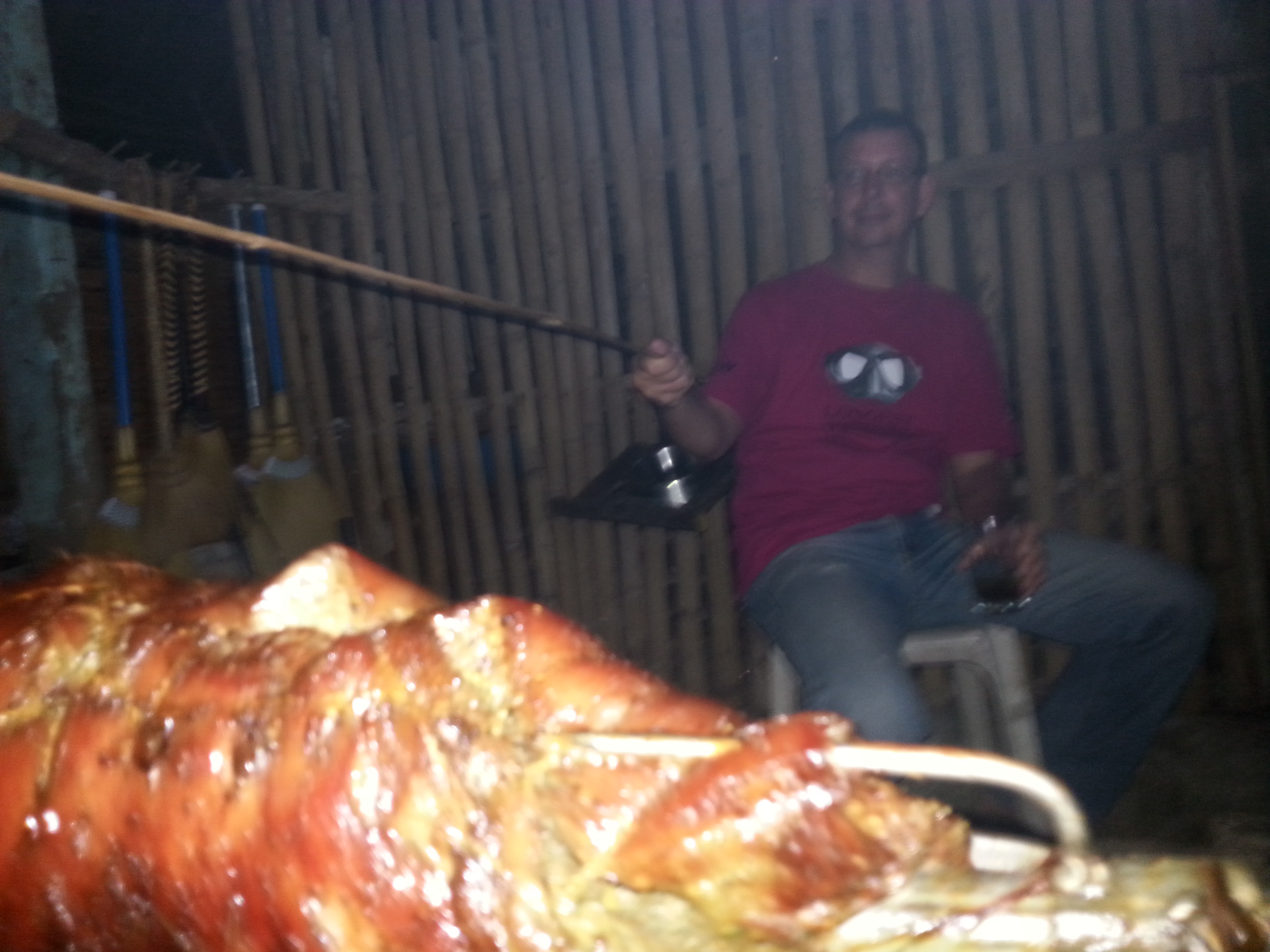
One of Bontoc’s specialties is Filipino-style Balinese “babi guling.”  The herb stuffed, slow roasted pork is to die for!  For people who don’t take pork, Bontoc will gladly serve fish or vegetables.
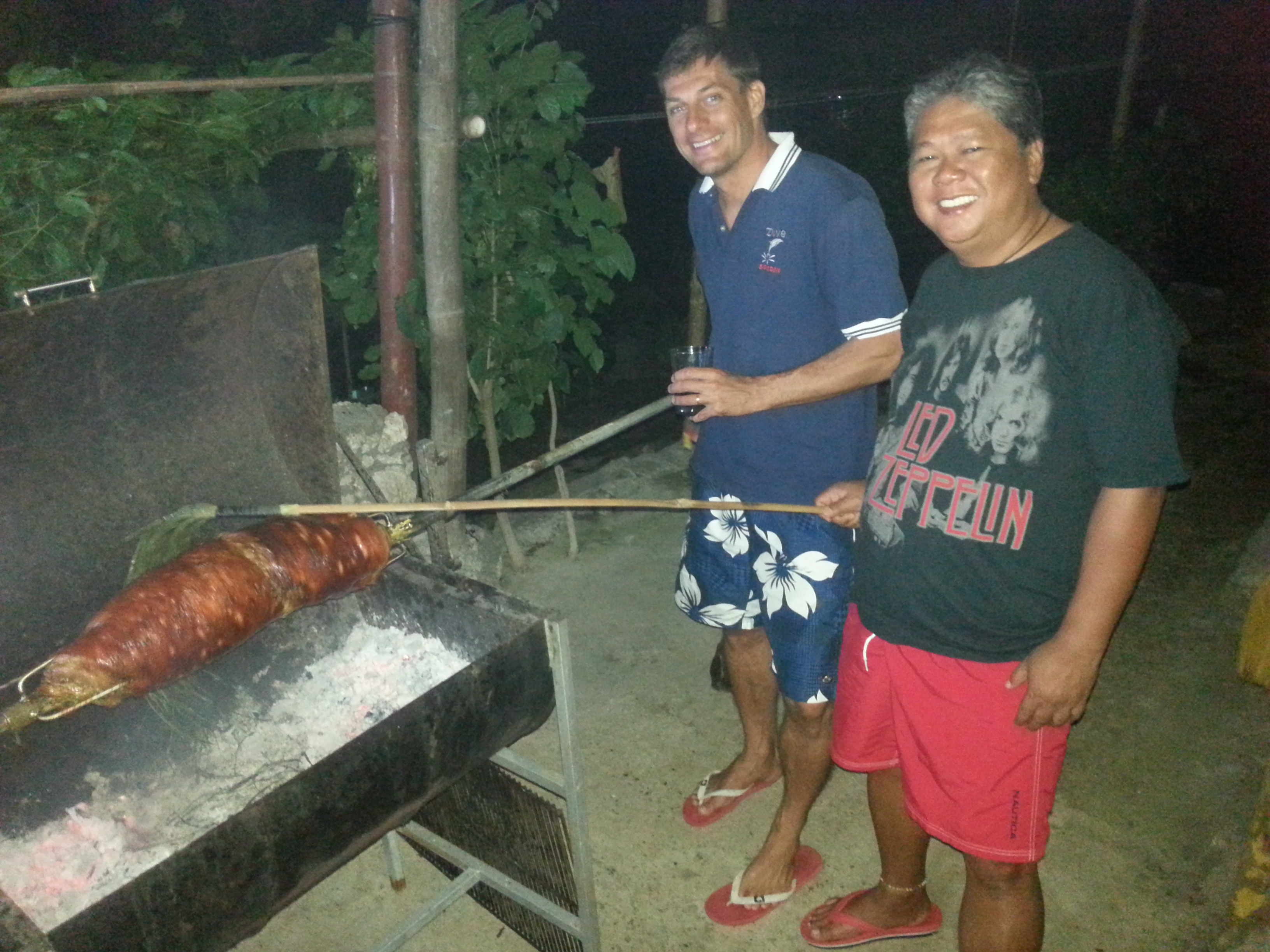
Eric and Romy tending to the Balinese pork roll.

Eric and Romy tending to the Balinese pork roll.

Slow cooking the babi guling
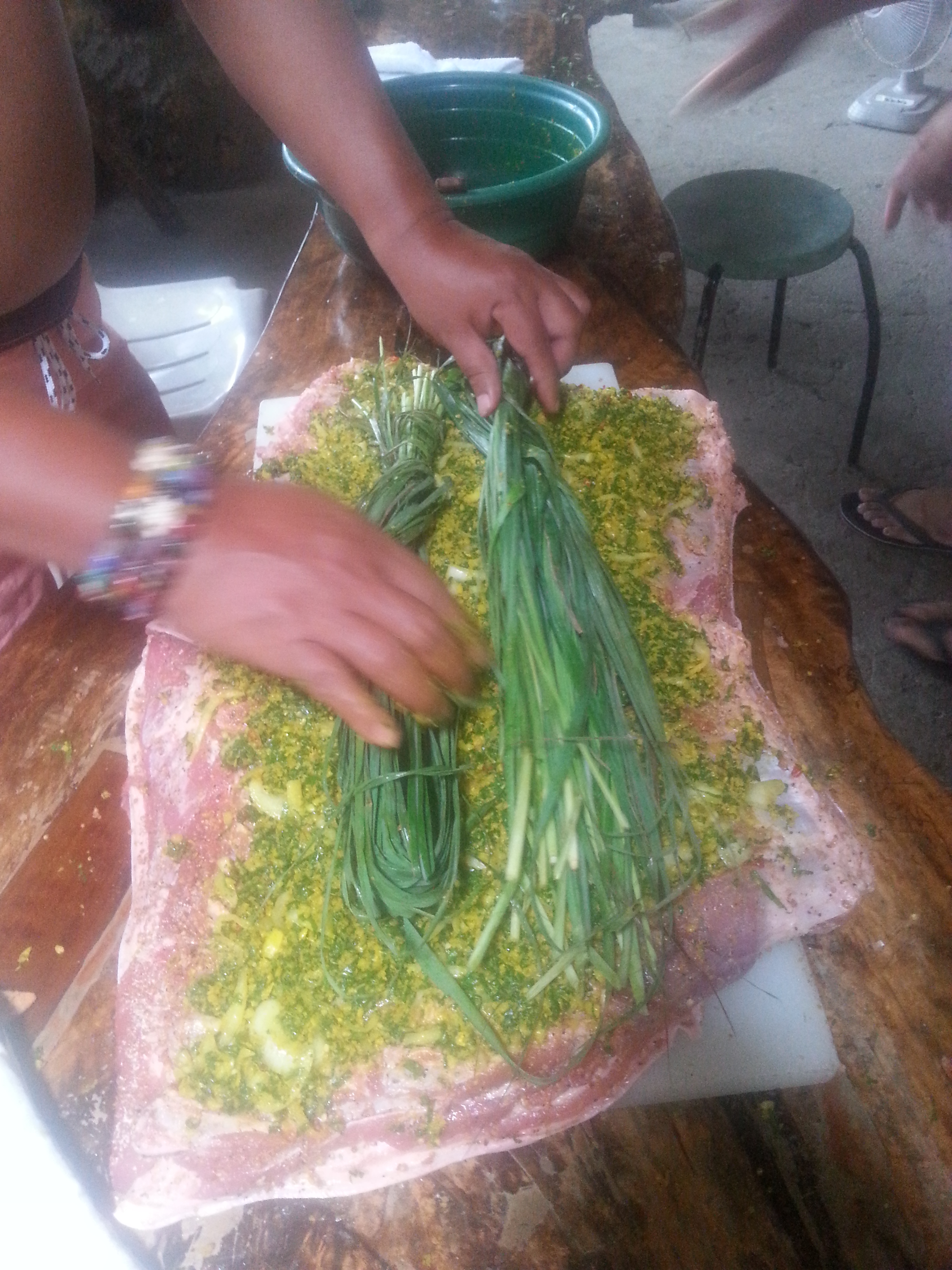
Slow cooking the babi guling

Rubbing the babi guling with spices.
Rubbing the babi guling with spices.

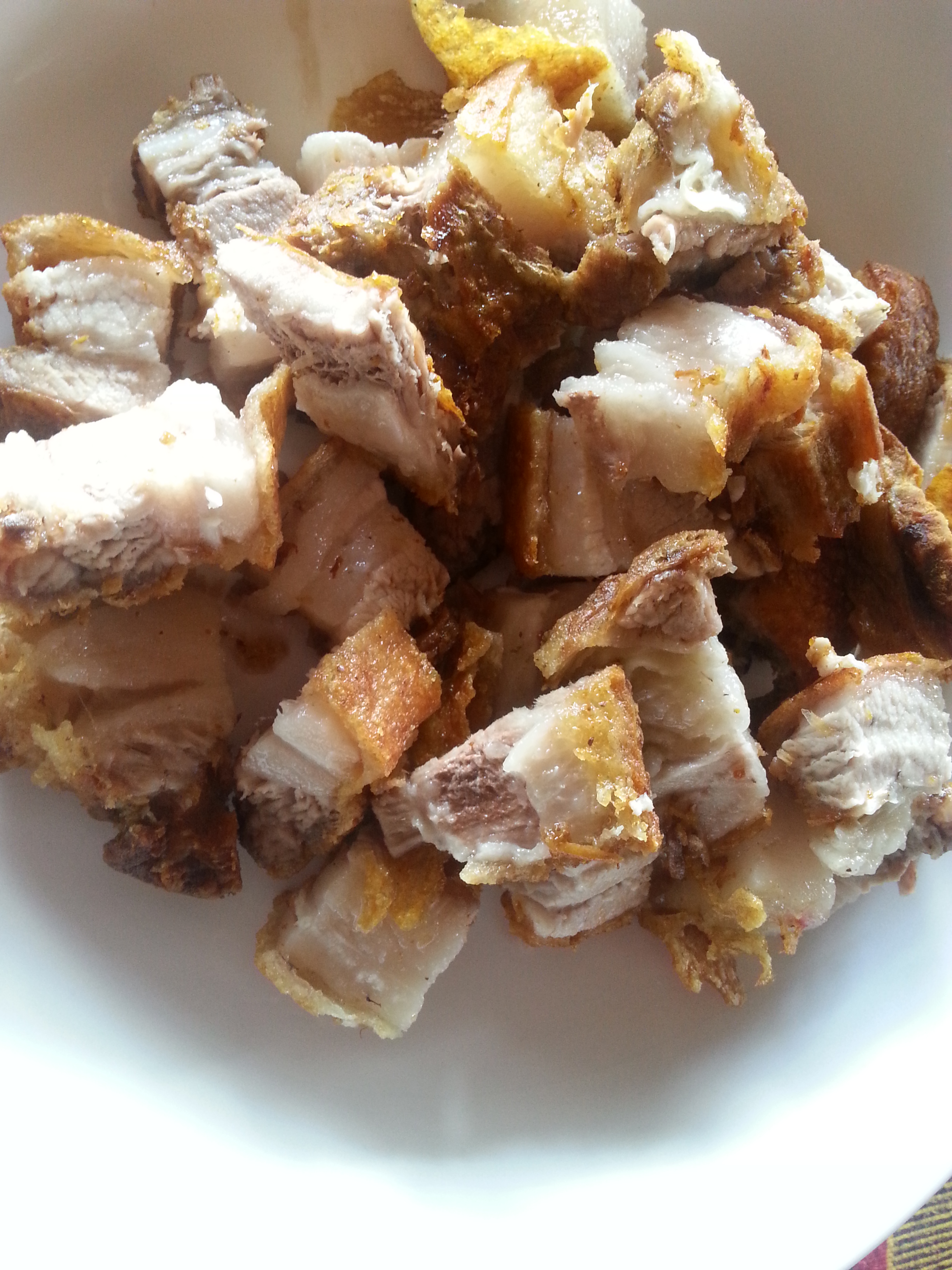
Pork belly....... drool.

Pork belly……. drool.

Almost done!

Almost done!

Bontoc in Batangas is a great place to spend the weekend, do some diving and enjoy the good life.  Highly recommended.

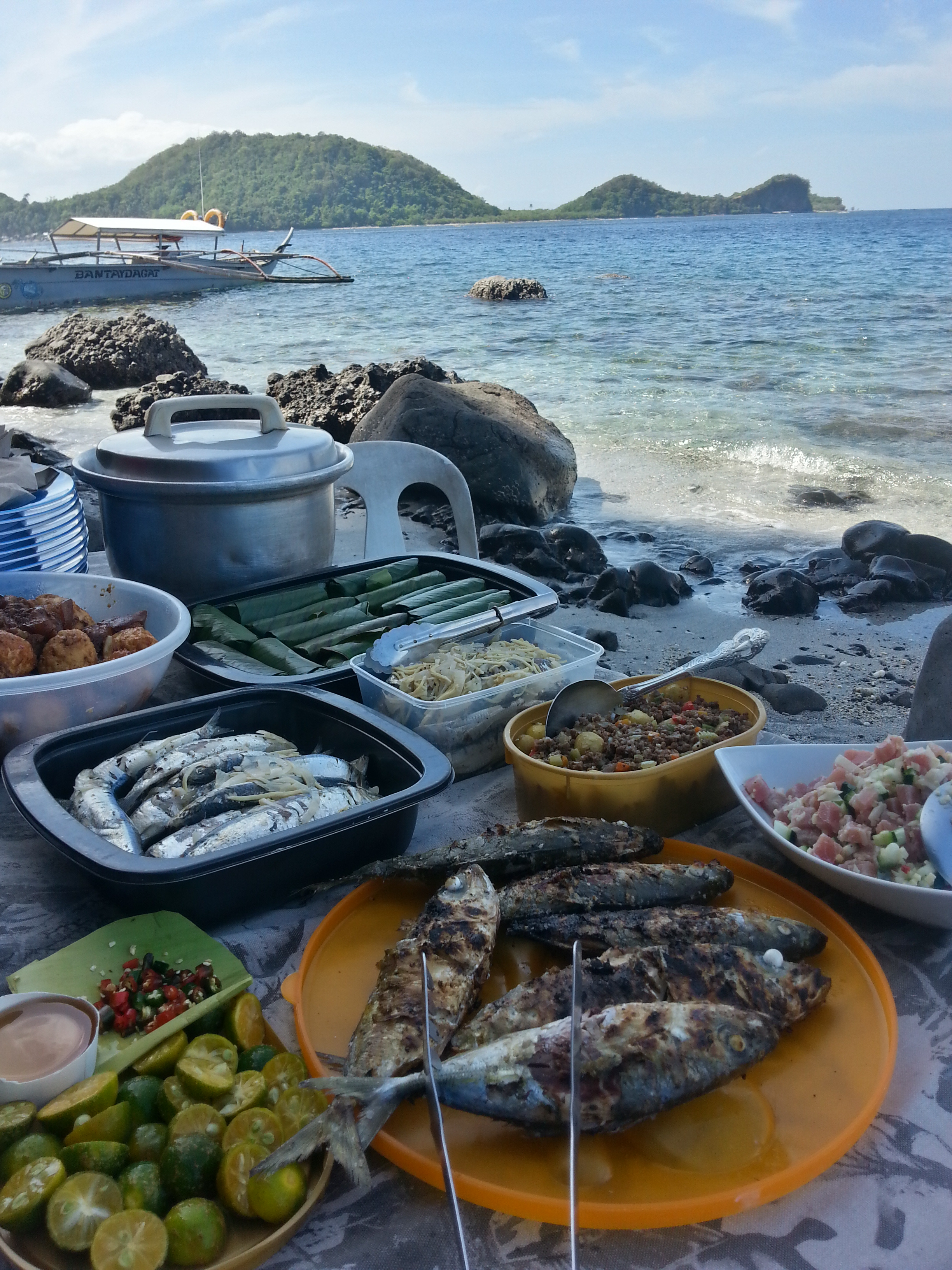
The best meal though was on the beach with fresh fish barbequed over the rocks and the rest lovingly packed from the house….
20131214_113033_HDR

“Snacks” for our interviewees on the beach – and the most amazing meal of the year.

20131214_124552

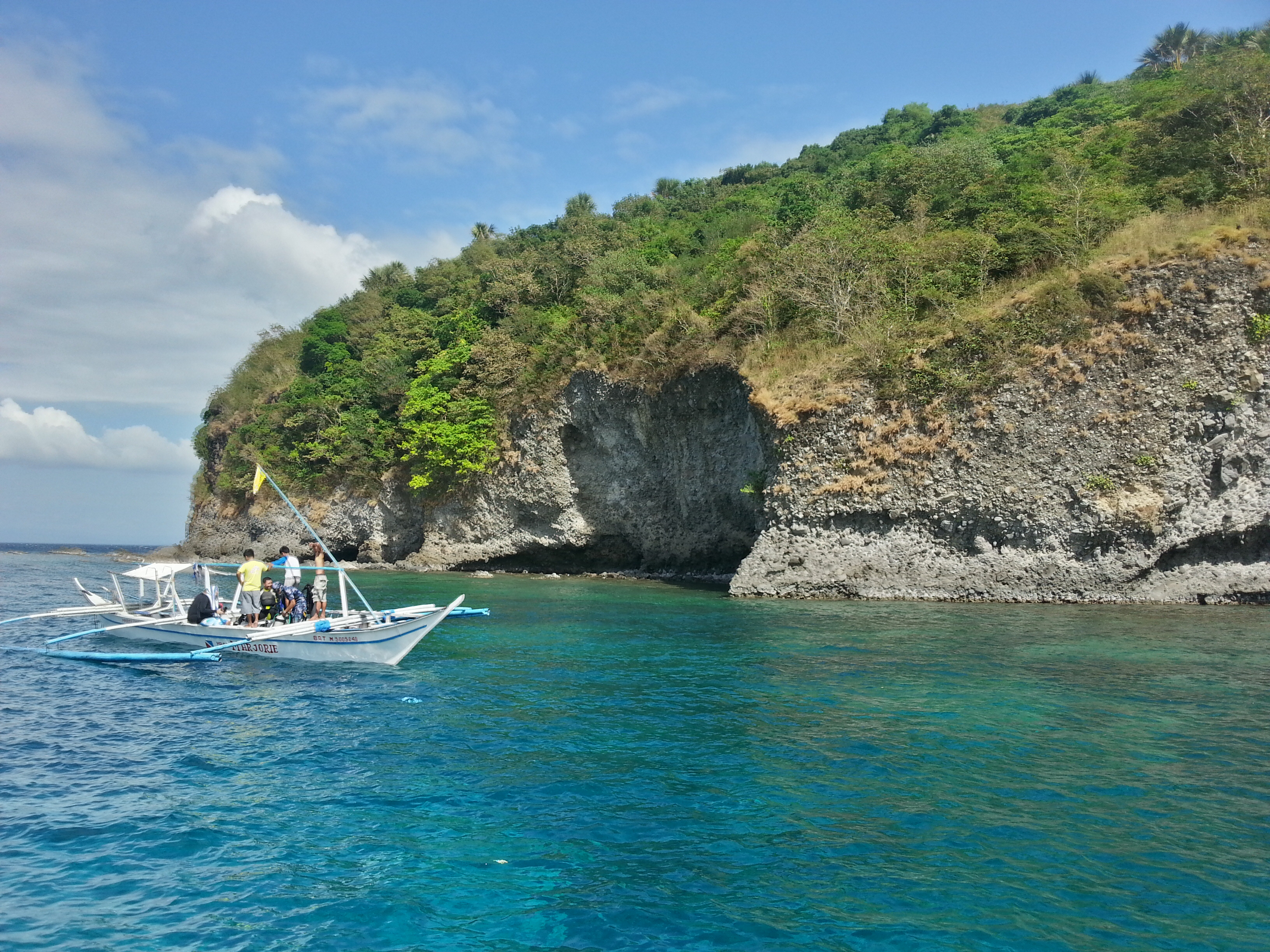
Romy guiding us to the next dive site.

20131214_123646

Work sucks.

20131214_124751_HDR 20131214_123533_HDR

Channeling Magellan

I had to leave the boat in Dili and take a bus (12 hours of ass-breaking bumping) to Kupang for immigration reasons.  When I rejoined ALK in Kupang we set off for the next island south – Pulau Rote.  Rote is part of the proposed Savu Sea National Marine Park.  It will be Southeast Asia’s biggest marine protected area when finally gazetted in the next few years.  We had some intelligence from The Nature Conservancy about some good places to dive at the southern tip of the island.  This is also the southernmost point of Indonesia.  TNC also mentioned an area with some nice limestone islands in the middle of a channel at the north end of the island.

Pulau Rote and the strait at the north end.

Our approximate route through the straits

Our approximate route through the straits

Eric voted against seeing the islands but Hans and I were interested so we ventured into the northern end of the bay to see what there was to see.  The north wind was strong as we motored into the bay.  At the deepest part of the bay we found a village that seemed to be straight out of the stone age.  At that point we also realized that we had sailed into the middle of a seaweed farm and the farmers onshore were increasingly distressed as they rushed to their canoes to intercept us.  Luckily Hans knows his craft well and we managed to get out of the maze of ropes without any casualties and went in search of a better channel.

A farmer tending his seaweed.  The ropes are fastened to the bottom and floated with empty water bottles.

A farmer tending his seaweed. The ropes are fastened to the bottom and floated with empty water bottles.

Eric watching for the best channel

Eric watching for the best channel

Stone age village at the entrance of the strait

Stone age village at the entrance of the strait

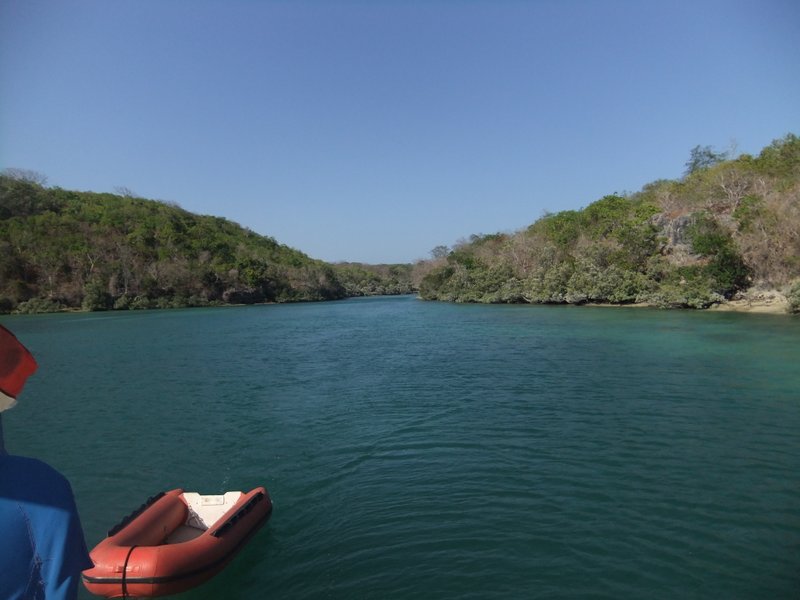
One of the first channels we passed through.  Which is the deepest???

One of the first channels we passed through. Which is the deepest???

We kept probing deeper and deeper into the channel.  Eric was on the mast scouting the channel ahead and I was on the bow relaying directions to Hans and watching for close rocks and coral heads.  The straight kept narrowing down to less than 30 meters wide and then opening up into wide lagoons chock full of seaweed lines floating on the surface.

DSCF5376

Seaweed lines along every coast.

Seaweed lines along every coast.

More seaweed farming!

More seaweed farming!

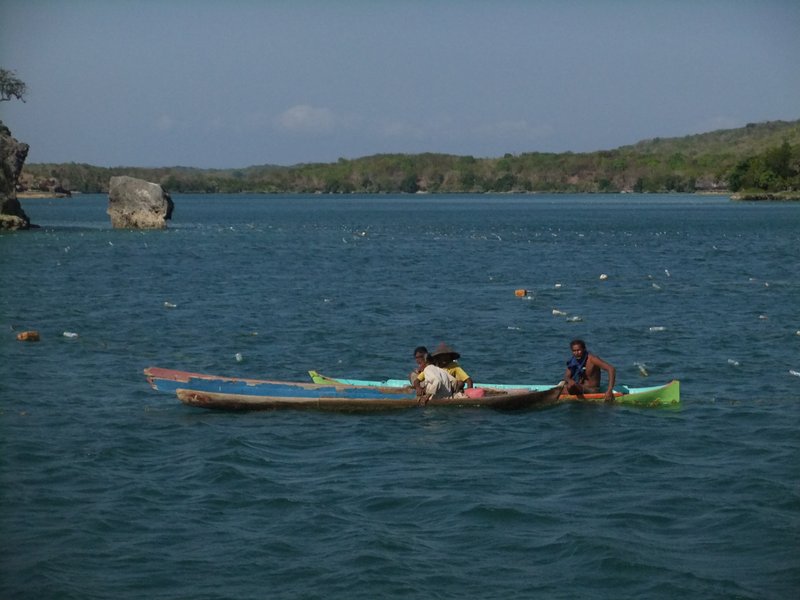
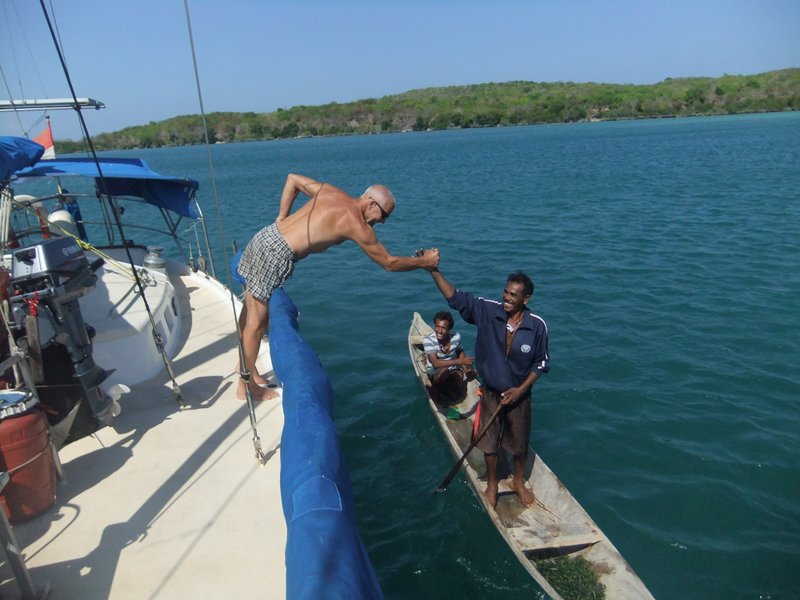
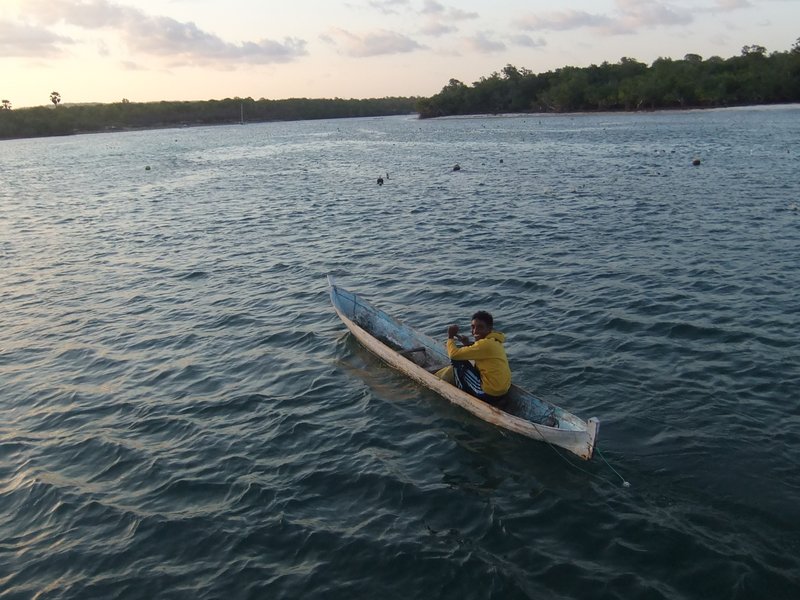
When we finally encountered some people further into one of the pools, Eric wanted to know if there are crocodiles in the area.  The diving wouldn’t be great but it might make for a few interesting shots.  Two guys approached in their canoe and were super friendly.  According to those two guys, the crocs in the area are big but friendly and won’t bite.  Eric was not convinced.  Were there any sharks?  “Yes.  Big ones,” as our new friend held his hands about 2.5 feet apart.  Eric still wasn’t convinced to get in the water.  Our friends also gave some good intelligence on the way through the channel – “Go north and then turn sharp south.”

Our first friends in the channel.  They paddled that boat for 4 hours every day to tend their crop

Our first friends in the channel. They paddled that boat for 4 hours every day to tend their crop

Who is friendlier? Hans or the locals?

Who is friendlier? Hans or the locals?

That was where it got REALLY narrow!  But Hans knew his stuff and we went through some places where we had only feet on either side of the boat – and even in those narrow spots there were still seaweed lines to avoid!

We felt like the first modern sailboat to cruise through that strait. This was the narrowest point and we had no idea if we would get through

We felt like the first modern sailboat to cruise through that strait. This was the narrowest point and we had no idea if we would get through

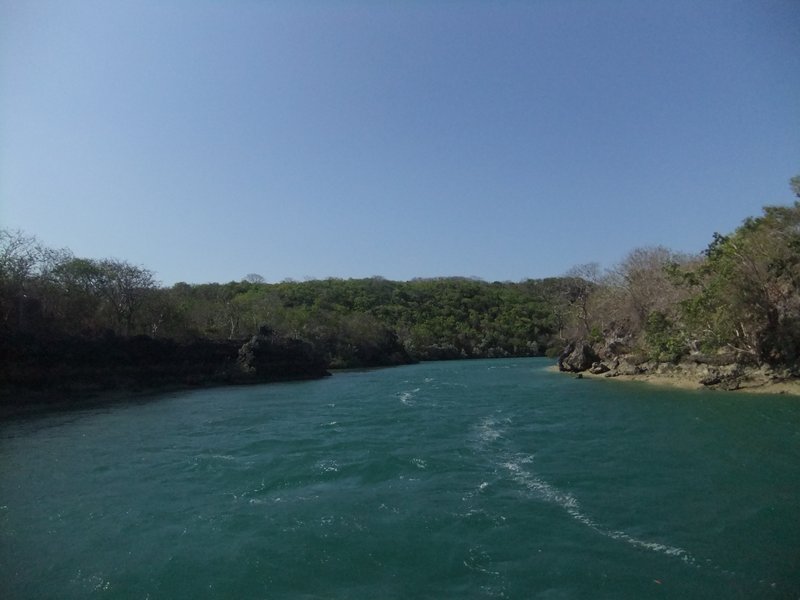
The narrow strait we came through

The narrow strait we came through

At the hairpin turn this boat came flying around the bend.  10 minutes earlier and we would have collided.

At the hairpin turn this boat came flying around the bend. 10 minutes earlier and we would have collided.

We passed through that narrow space - harrowing.

We passed through that narrow space – harrowing.

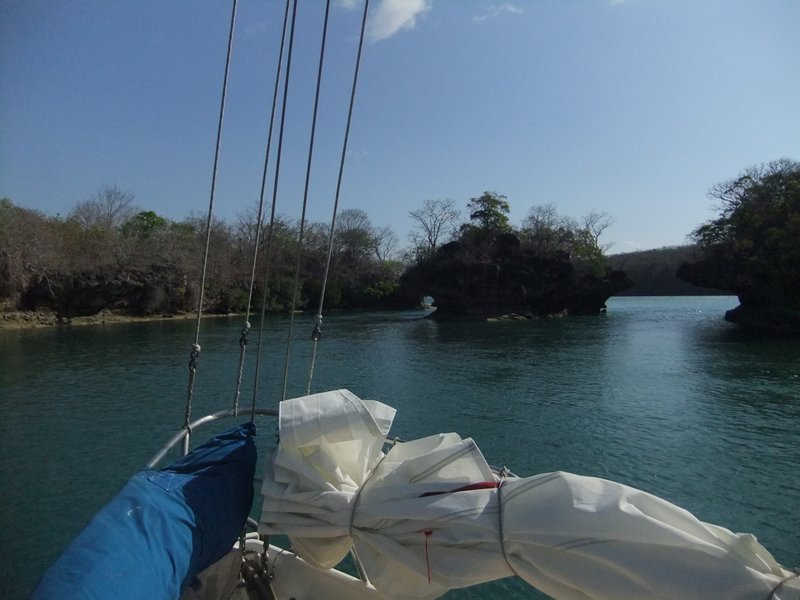
Do you see a passage ahead?  I don't.

Do you see a passage ahead? I don’t.

We chose that little tiny space on the left.

We chose that little tiny space on the left.

As we got through one particularly tight squeeze, a young seaweed farmer hailed us and asked for a lift.  Of course we obliged and he paddled over and tied his little canoe to the boat and guided us through the next sections.  Ganesh is a 19 year old seaweed farmer from the village at the end southern end of the channel.  He has a wife (Estheri) and a 1 year old baby girl (Geisha) and makes a good living selling his produce.  Ganesh guided us to the entrance of the channel to the Indian Ocean but we couldn’t clear the reef at low tide so we headed back into a protected lagoon to spend the night and wait for the next high water.

Our friend, Ganesh.

Our friend, Ganesh.

Ganesh took the can of coke we gave him back to his family to share with his wife and baby.

Ganesh took the can of coke we gave him back to his family to share with his wife and baby.

Another friendly guy we met the next morning.

Another friendly guy we met the next morning.

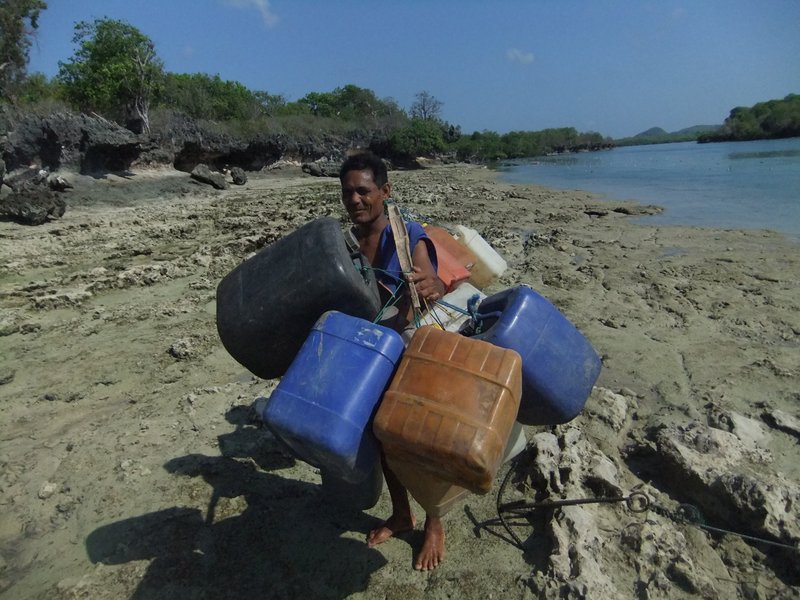
This guy was coming to the main village to collect water.

This guy was coming to the main village to collect water.

Pictures from Eric and Hans

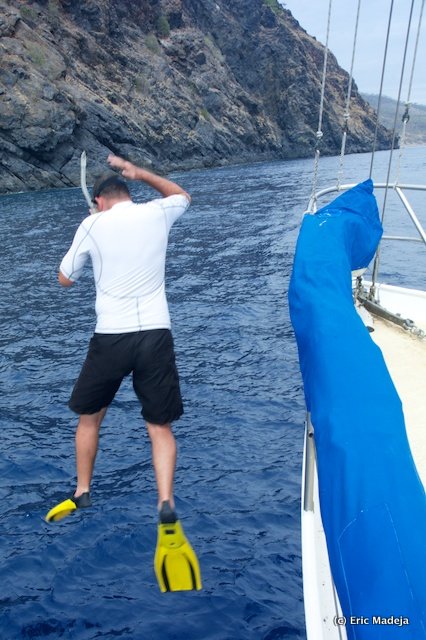
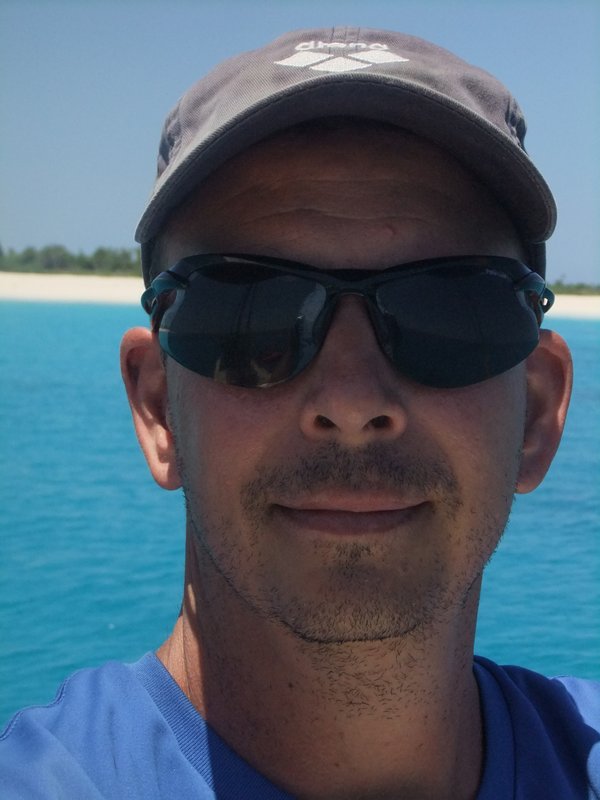
Eric and Hans had huge camera setups and took lots of pics on every dive. In a fit of vanity, I asked for some of the pics they took of me so I can share with family and friends.

Cruising with ALK

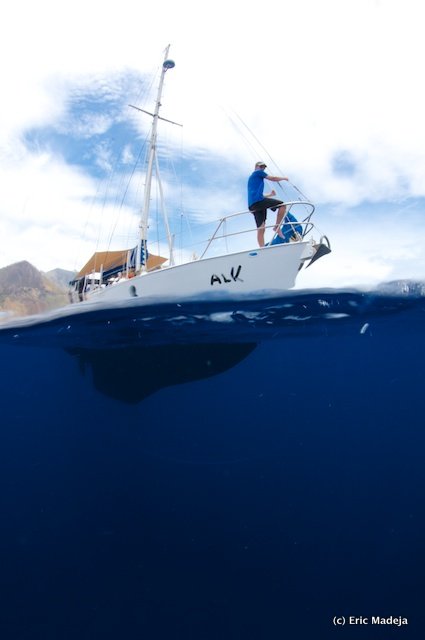
No, I did not go cruising with my mother, Anne Louise Kassem (ALK).  ALK is a 40 foot sailboat that belongs to Hans, a friend of my Swiss friend and collaborator, Eric Madeja.  Eric is an underwater photographer and collaborator on the Coral Triangle book.  Hans is a Dutch pensioner (starting this year) who sailed ALK from Holland, through the Mediterranean, down to South Africa and across the Indian Ocean over the past 30 years.  The boat now stays in the Malay Archipelago year-round and Hans shuttles between ALK and his home in Amsterdam.

Eric_EMA4966-001

Eric had arranged for Hans to do a cruise from Ambon to Timor Leste, down to Indonesian Timor and then Alor.  I had been invited to cruise from Sabah to Darwin with them last year but had obligations in Kyoto that prevented my joining.

I met Hans for the first time on the Com harbor jetty.  They came across for dinner on shore at the guesthouse where I stayed that night.  We had too many beers, a great meal cooked by the owner’s wife and heard tales of remote volcanoes in the middle of the Banda Sea, whales and sea bird colonies.  Hans was gregarious and friendly.  I liked him instantly.

Hans at his usual spot scanning the electronic charts and writing his blog

Hans at his usual spot scanning the electronic charts and writing his blog

Captain Hans at the helm

Captain Hans at the helm

The next day, they picked me up and we set off for the very eastern tip of Timor and the Nino Konis Santana National Park – Timor Leste’s first and only national park.  It had been more than 20 years since I had last been on a sailboat and I must admit to being a bit nervous.  But Hans gave me a tour (proper operation of the head first!) and showed me to my bunk and where to stow my stuff.  Most importantly, all shoes got stored FAR below deck.

ALK is a 35 year old, steel hulled sailboat and has been with Hans for the last 30 years.  She is equipped with GPS, autopilot, sonar and radar!  I had never played with any of those things before and it was fun to start learning about them.  I also had to learn to operate the compressor so we could fill tanks and dive!

Eric adjusting the compressor

Eric adjusting the compressor

I quickly fell into their daily routine.  If we were moored somewhere conducive for diving, Eric would get up early and go for a dawn dive.  I usually skipped that dive and made coffee and tea while Hans slept a bit later.  There would be a mid-morning dive, a bit to eat for lunch and then an afternoon dive, and sometimes Eric would go spearfishing for our dinner.

Time to check out the dive site!

Time to check out the dive site!

Other days, we had to travel to the next sites to keep our schedule.  Eric preferred sailing at night to allow for diving during the day but Hans found it tiring and they had to discuss it often.  Usually we motored with the diesel engine and used the sails only with a really favorable wind.  From Com back to Dili we sailed over night and I kept the watch from midnight to 3:30am.

Hans baked fresh bread several times a week with a  special pan that made the bread on the stove top.  Eric loved to serve sushi with a cocktail in the evenings.  We had green curry, spaghetti, maggi mee, nasi goreng and other delicious meals every day.

Its a small galley!

Its a small galley!

Sometimes you have to take off your pants to fit into the galley.

Sometimes you have to take off your pants to fit into the galley.

The boat cruised with just engine power and a good current at 5 knots.  With a good wind and the engine we could hit 7 or 8 knots.  The relaxed pace was a joy but it meant that we had to spend much of the time in transit between sites.

It was great to be back on a boat, even if just for a short time.  Memories of my high school days sailing in the Aegean and my American grandfather all flooded back.  Would I ever like to have a life like Hans’?  Maybe I would some day.

DSCF5407 DSCF5404 DSCF5522

Rendezvous in Com, Timor Leste

Eric and I set a rendez-vous point for the eastern end of Timor island between 10 -12 October.  Eric would be on ALK with Hans, having departed Ambon a week before. I would arrive by some sort of transport at the remote eastern end of the island.  Honestly, I was skeptical about the plan.

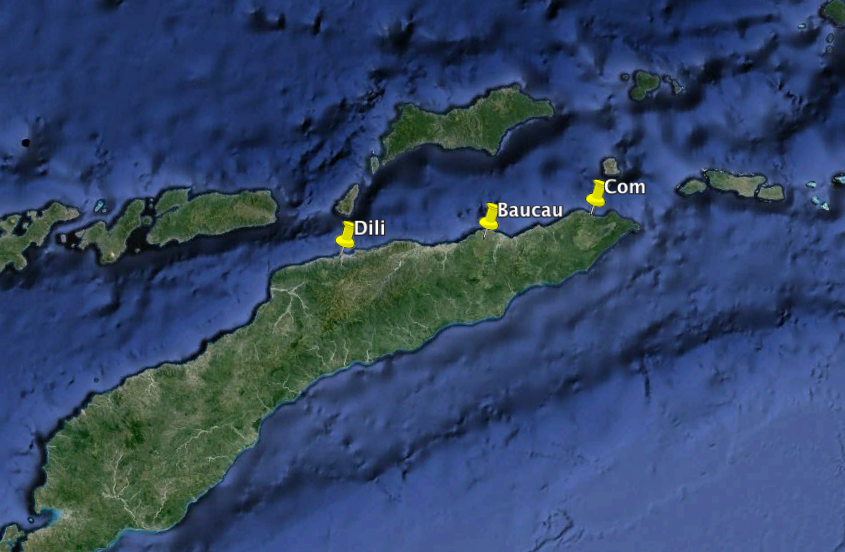
Screen Shot 2013-10-26 at 1.07.10 AM

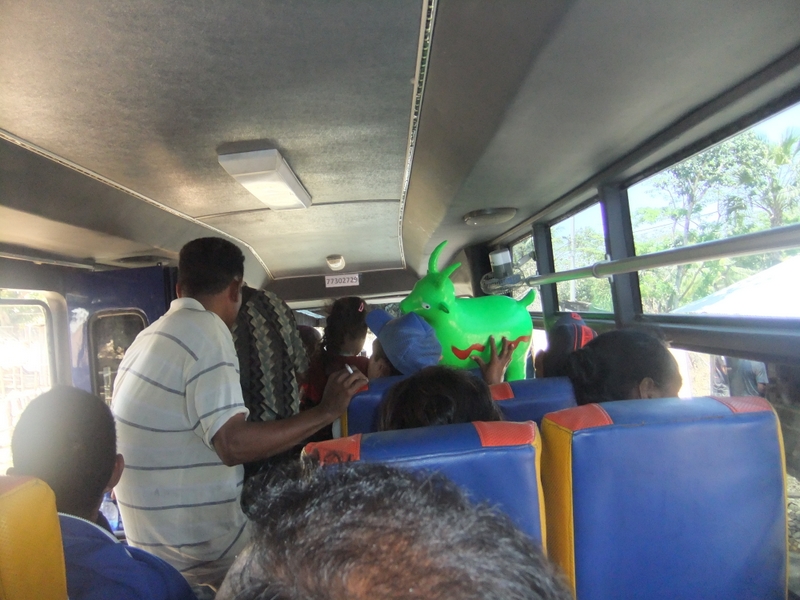
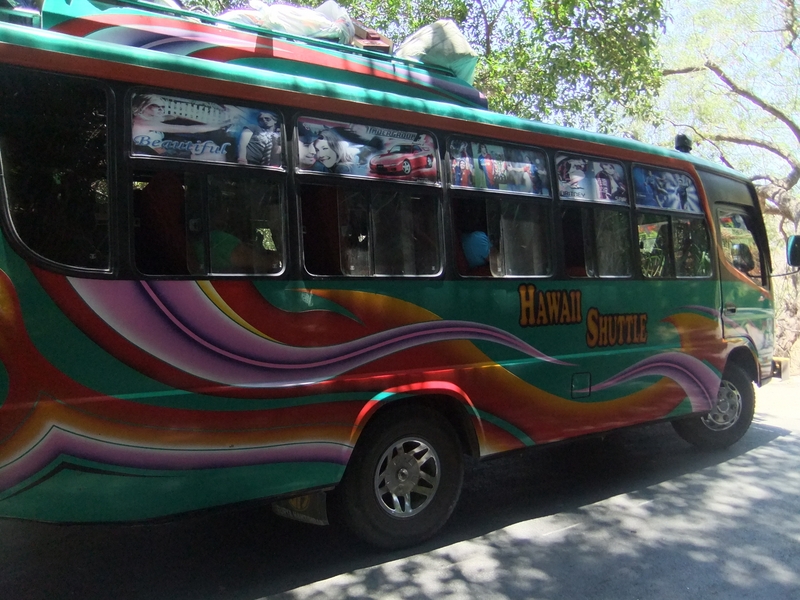
But, after a 4 days spent getting acquainted with Dili and an array of backpackers, conservationists and locals I managed to piece together the rudiments of the route to the hamlet of Com.  The journey took the better part of two days, 2 over-packed busses and a 3 hour ride in the back of a flat bed truck.  The buses both had seats for 19 passengers but managed to pack in more than 30 with people on the roof and hanging out the doors.  On the second bus, I had the pleasure of standing on a 1 square food spot near the rear door surrounded by chain smokers and a family with a neon-green, life-size inflatable goat with truly demonic eyes.

DSCF5073

Bus from Dili to Baucau
Bus from Dili to BaucauDSCF4955DSCF4958

But, overall the passengers were friendly and helpful with lots of offers of cigarettes and information about the towns we passed through.  The road was not as bad as people had warned me, but it was awful.  The 90 km from Dili to Baucau took nearly 5 hours.  From Baucau the same distance took nearly 5 hours as well.  The roads were often just a single lane of sealed road with dusty potholes in between.

Dusty road to Baucau

Dusty road to Baucau

Dry rice padi fields of Timor Leste

Dry rice padi fields of Timor Leste

Padi fields at the end of the dry season

Padi fields at the end of the dry season

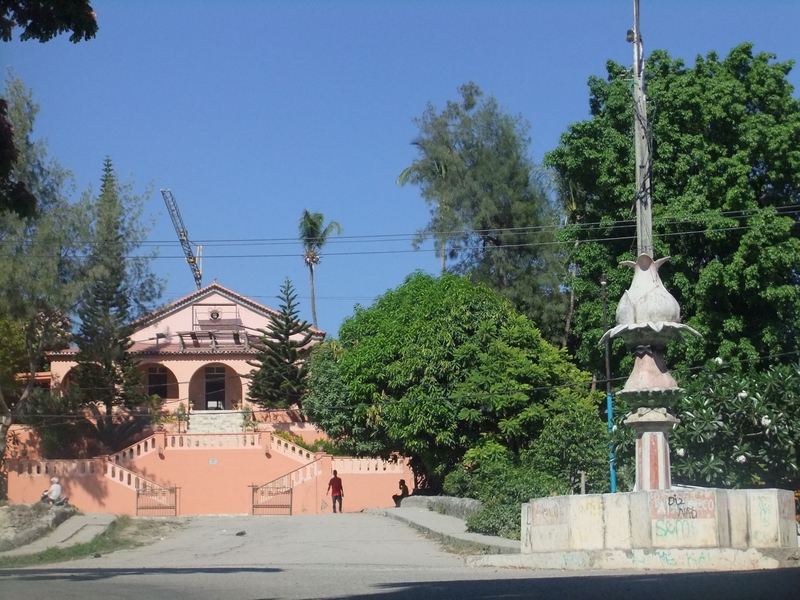
I had to overnight in Baucau and found a really nice guesthouse close to the old Portuguese centre of town with some nice old buildings still remaining.  It was hard to tell if the buildings were pockmarked from age, neglect or war.  I guess it was a combination of all of the above.

An old Portuguese house in Baucau

An old Portuguese house in Baucau

The fancy hotel in Baucau - the Pousada.

The fancy hotel in Baucau – the Pousada.

DSCF5032

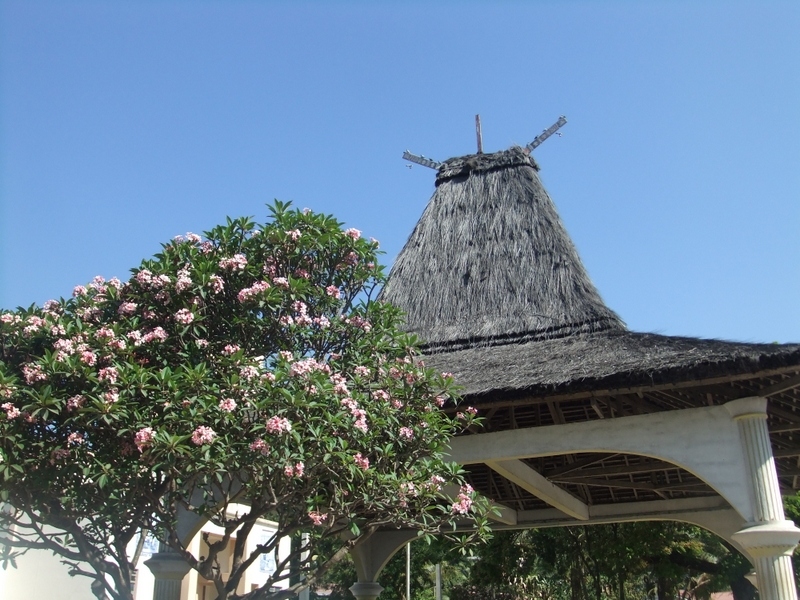
In front of the Baucau cathedral - a traditional roof

In front of the Baucau cathedral – a traditional roof

The Melita Guesthouse sign.

The Melita Guesthouse sign.

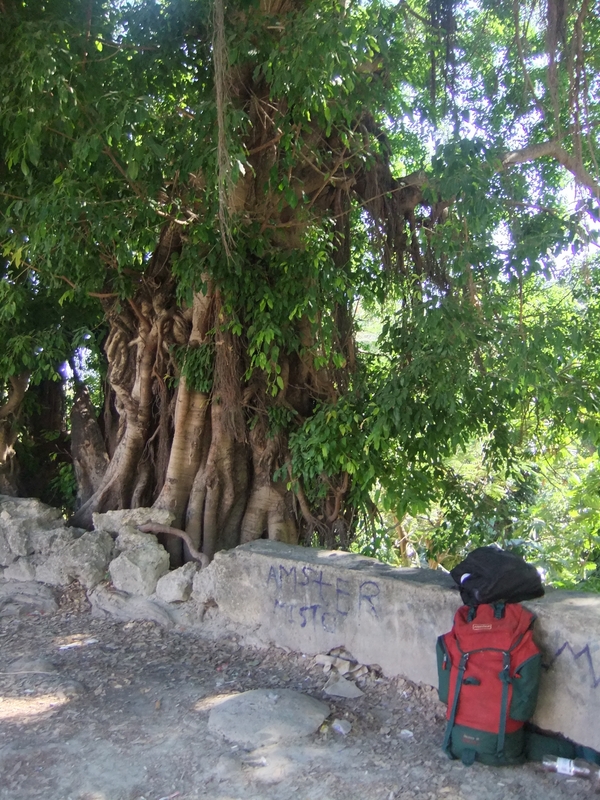
The next morning, I set out for Com.  According to the guesthouse I had to walk up to the roundabout and wait for the bus to Los Palos.  It should cost USD3.  The roundabout had a beautiful old banyan tree with a  wall under it and seemed to be the main bus stop.  The young students waiting on the wall were friendly and we chatted for a while.  And the bus didn’t come.  And it didn’t come.  And then it came.  But it was totally packed full – so I waited for the next one.  When that one came, it was also full but I squeezed out my 1 square foot and off we went.  My plan was to disembark in the town of Lautem where the coastal road veers south to the interior capital of Los Palos.  Lautem came before I was expecting and I was so happy to get away from the bus and the chain smokers and the demonic goat.

The nicest bus stop in the world?

The nicest bus stop in the world?

I was then told to wait in the near-deserted fish market for the next vehicle to Com.  The few people there were friendly and wanted to know all about where I was coming from and where I was going.  They also told me that there were no more vehicles going to Com.  I did not believe them until the two locals who got off the bus decided to walk there – 30km – and the local police woman came and said the same thing.  So, I walked back to the roundabout where the bus dropped me and started to hitchhike.  Within 5 minutes, an angguna passed, going to Com and I hopped in!

Chatting with fellow travelers at the Lautem fish market / bus stop

Chatting with fellow travelers at the Lautem fish market / bus stop

On arrival in Com, I found the rendezvous point with ease – its not a big place – and immediately spotted ALK anchored off the beach.  What a joy it was to see the boat and the little dinghy coming across the water with Eric at the helm. It was time for a beer!

My first view of ALK at Com!

My first view of ALK at Com!

The Sina Guesthouse in Com - home for a night.

The Sina Guesthouse in Com – home for a night.

East Timor

I have never been in a conflict zone or a war zone.  The closest I have ever come was when I visited Eritrea in 1994, 2 years after their independence.  The scars of the war were still clearly visible and it made an impression.  But I was too young to be able to understand the true nature and horror that went on there.

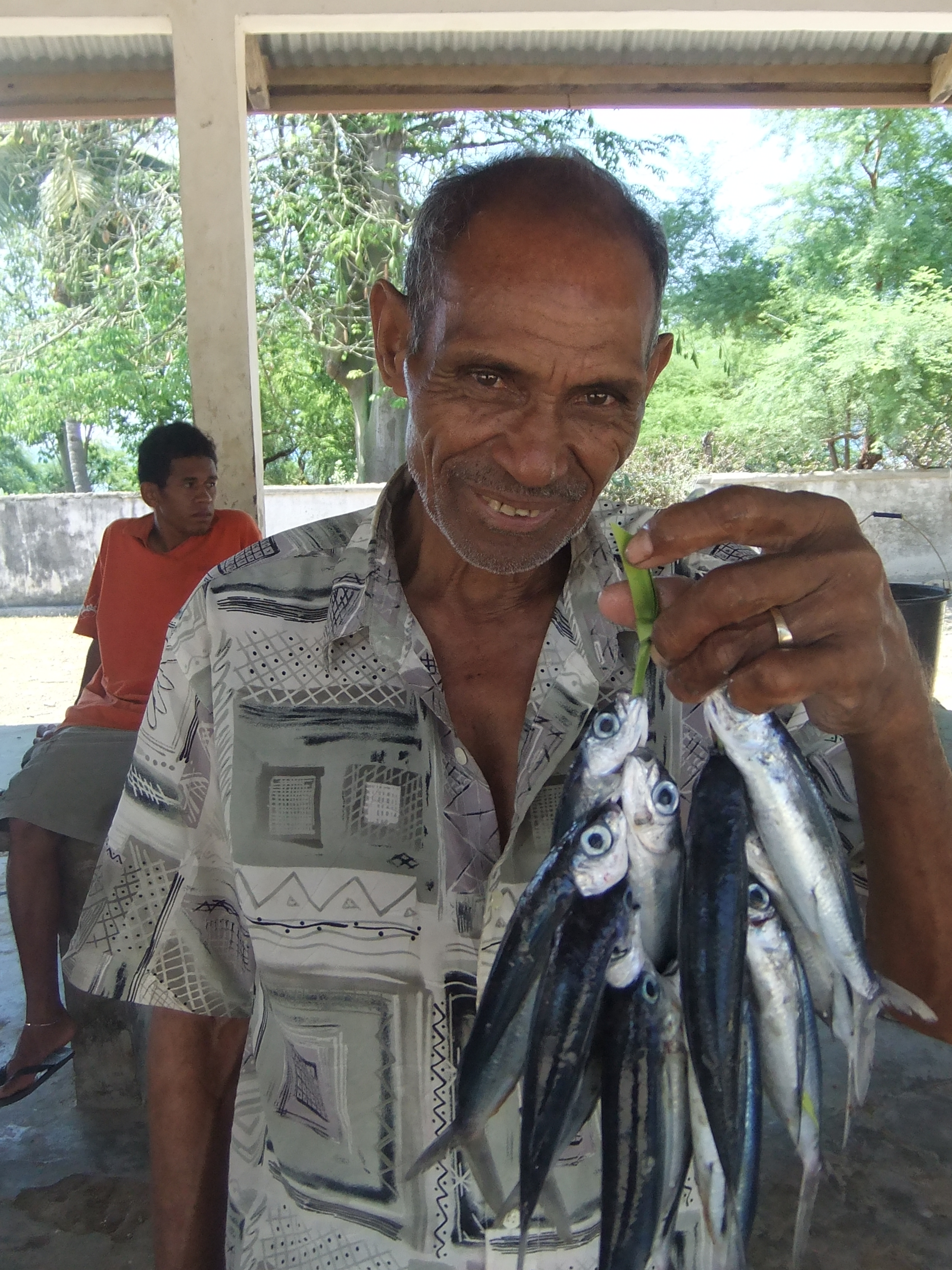
Fish vendor in Lautem, Timor Leste

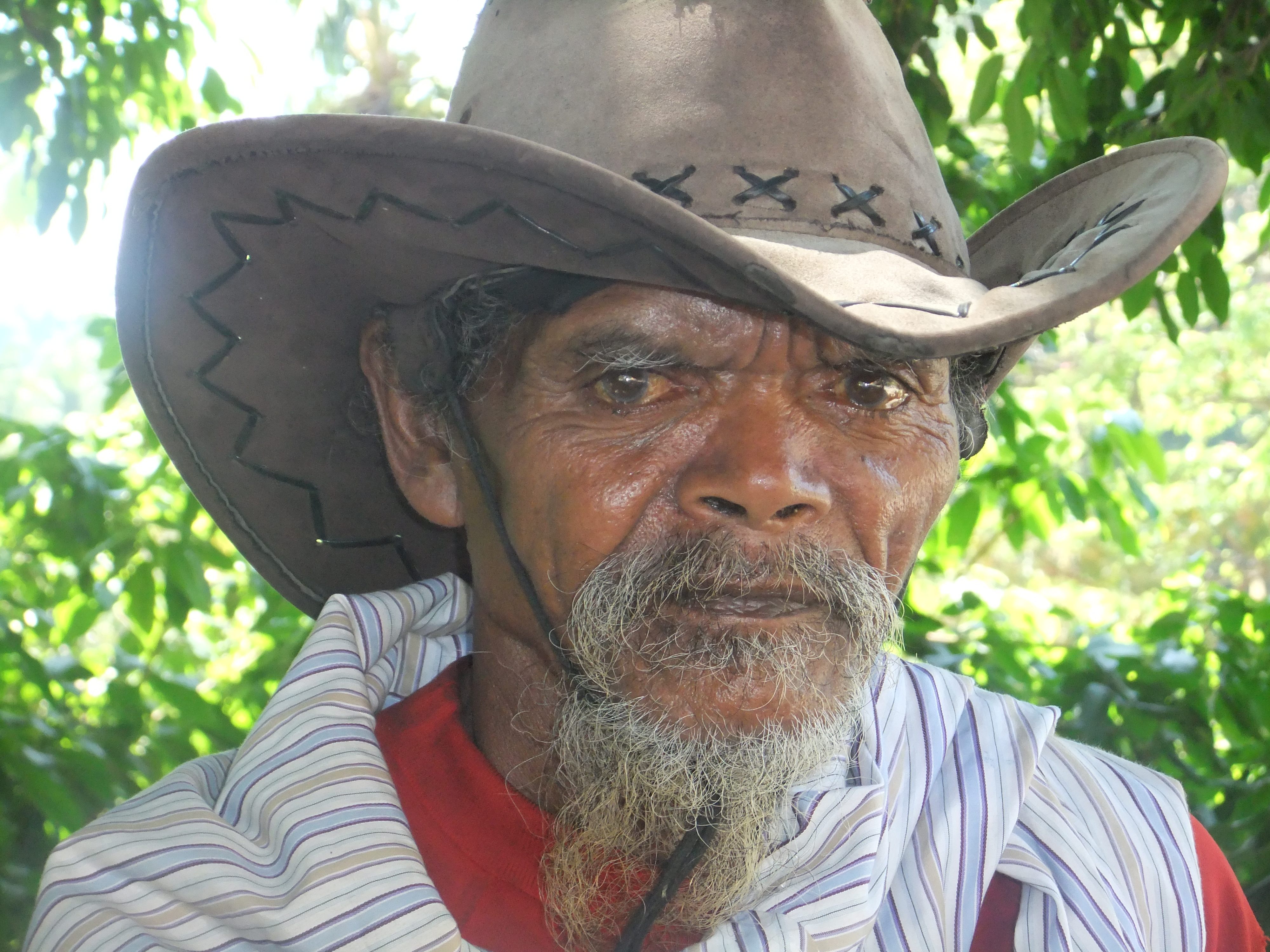
Looking at some of the older faces in the Merpati boarding lounge in Bali’s Denpasar airport, waiting to board my first flight to Dili, Timor Leste, the force of what these people had been through really hit me.  Now, just 10 years after finally achieving independence, Timor Leste is an incredibly poor country with almost zero real infrastructure.  The memories are still fresh in the faces of the older people and the young artists are producing memories of the war, including the first ever Timor Leste-produced feature film – a love story set during the resistance.Old man in Baucau, Timor Leste

In 1999, as the Indonesian’s withdrew from their brutal occupation of East Timor they annihilated the country.  They set fire to the hills and destroyed the infrastructure they had built over 30 years of occupation.  There are still few lights on side streets and the roads beyond the capital Dili are abysmal.  Dili has no sewerage system and schools have aid workers coming to help assemble classroom desks.

Traditional house in Com, Timor Leste

But the people seem pretty happy.  Everyone smiles and says good day or good afternoon as you pass them in the street.    In the districts outside of Dili, people are more reserved but still friendly.  Almost everyone speaks Bahasa Indonesia, Portuguese, and some version of a local language.  The national language, Tetum, is not universal throughout the country and people from the extreme ends can have difficulty communicating if not using an imported language.

Spear fishermen heading out to catch the low tide, Com, Timor Leste

I had a chance to meet an ex-resistance leader.  He is now one of the leading voices for environmental issues in Timor Leste advocating for reduced consumerism and a return to some of the traditional collective values that maintained forests and grazing land in the harsh environment that doesn’t get rain for 6 months a year.  He is confident that the young country’s leaders shed too much blood to waste this opportunity.  I just wonder what happens when the next generation takes over.

Pulau Timor

One of the big adventures of my life is about to start.  Part of my career change plan is to become a better writer and get some income or support from a bit of writing.  There are two parts to the plan right now:  1) I have a contract to write a book about the Coral Triangle with John Beaufoy Publishing and 2) a series of articles about marine conservation in the Coral Triangle for Action Asia magazine.  Both projects are with my co-author/photographer, Eric Madeja, of Treasure Images.
To start the process the first article in the series was submitted yesterday to Action Asia.  The anticipation of their response is killing me.  What if they hate it?  What if I’m a terrible writer?  Killing me!

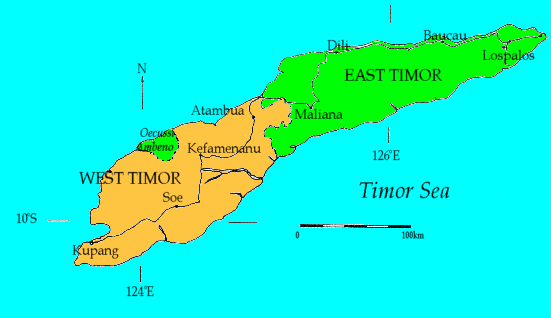
Timor Island – Indonesia and Timor Leste

The second step is a research trip to two sites in the Coral Triangle.  Tomorrow I fly to Bali, Indonesia and then to Dili, Timor Leste the next day.  In Dili, I will visit the Conservation International staff and make contacts to visit the Nino Konis Santana National Park.  The park is 200 km east of Dili at the far eastern tip of Timor and getting there is described as a challenge.  Eric is on a sailboat on Ambon now.  We are scheduled to rendez-vous at the village of Com near the national park between 9 – 11 October.  There is a small beach resort there where we will leave messages for each other.  When (if?) I meet Eric, I’ll sail back to Dili with them and disembark.  You can follow Eric on the sailboat via http://www.winlink.org/userPositions with callsign PA2ALK.

Savu Sea area -(c) The Nature Conservancy

They will sail on to the other end of the island, 200 km west to the Indonesian town of Kupang.  I will need to go through immigration and will take a bus from Dili to Kupang.  In Kupang, we will meet with the Nature Conservancy staff and visit the Savu Sea Marine Park area for the next article in the series.

I’m looking forward to some ‘roughing it’ travel, some good fish, finding some reserves of patience, and a new adventure.  Wish me luck!